Thursday, May 31, 2012

COSTS TO CONSIDER IN A NEW HOME

looking to a long-term savings plan


As we’ve said before – building a new home from the ground up can have some hefty upfront costs that can cause an enthusiastic and excited home-maker to panic!  But don’t be disheartened – an early and wise investment will mean long-term benefits and savings – especially in this market.

As we’ve ploughed through many layers of earth to build great foundations, we’ve also ploughed through many websites to read opinions and advice regarding home building in order to add to our vault of knowledge when dealing with our clients. 

There are the obvious things to consider: budget, builder and supplies, but we’ve compiled a list to help you in defining and anticipating the lesser considered issues around building your dream home.  It’s by no means complete, but it does help to settle some anxious moments when you feel you may have made the wrong decision!

Friday, May 18, 2012

THE ROLE OF THE QUANTITY SURVEYOR


just another bill to pay?


Building a home will save you money in the long run, but the initial costs can sometimes cause one to want to cut corners and ‘manage everything in-house’.  The fact of the matter is that whilst bricklaying may be a trade that most people could master, there is far more involved in building a house than just the brickwork…. professionals and consultants who have degrees with many letters after their names are essential to the long-term investment in your home.  Quantity Surveyors (QS’s) are one such group of experts.  If they do their job, not only will they save you money in the long run, they’ll also help you save throughout the building process.

The QS’s main responsibility, as an industry professional, is to enable the client or contractor to estimate accurately the value of construction works.  In some spheres they are also known as cost planners.  As their title suggests, their role is to quantify the myriad of resources that go into a construction project, including labour, materials and supervision.

Friday, May 11, 2012

PUGH HOUSE | FITTING FOR THE FUTURE

low energy consumption for sustainable living


As we nobly spoke of the elegant and environmentally sustainable design and construction of one of our houses on Olive Crest Environmental Estate, we now want to share the internal measures that were taken to secure the ongoing sustainability.  The way in which energy is stored, used and saved on a day-to-day basis in a house that is home to an active family of four.


The first and most obvious design feature is the use of natural lighting.  With a-wall-and-a-half of sliding stacker doors surrounding the kitchen, dining and reception areas, the house not only flows well from arrival to the first drink and then onto the pool deck, it maximizes the natural lighting that enters into an area in which the family will often entertain and spend time eating together.  In every nook there are wall to ceiling windows that again bring in the sun and ambient light to areas that would otherwise require a light or leave you frustratingly fumbling for the door handle or light switch.

Friday, April 20, 2012

PUGH HOUSE | THE LAY OF THE LAND

everything green | settling into the environment
Just one week before the owners are set to move in, we take a walk through our latest luxury home and review the green building measures that were taken to make this house an environmentally friendly structure...

A small and unassuming driveway peeks onto the Olive Crest road, but as one drives down the entrance, two paved tracks in perfect counterpart, it becomes clear that a private family haven is nestled on this neatly tailored plot on the environmental estate in Johannesburg’s western rand.

Wednesday, March 21, 2012

CREATING SOMETHING NEW

There are two types of people (so some say…): Those who watch things happen and those who make things happen.  We try to be in the latter group.  Throughout history there have been people who need to pioneer, explore and exist beyond the boundaries.  There are also those who need to stay behind and keep the home fires burning.  They are not mutually exclusive and couldn’t actually exist without the other.  We often find ourselves inspired by the people who think so radically differently, that we find ourselves moving beyond the boundaries of our profession and working harder to stay ahead of the pack.

Here is one such example.  Berndnaut Smilde is a Dutch artist that has created indoor clouds.  His concepts of creating something new within a space is not too far from what we do.  Sure, the materials and backdrops are vastly different, but the idea of recognizing the need to co-exist with our environment is synonymous with the current global trends.


In his own words, he is fascinated with the ephemeral aspect of his work.  These clouds only exist in photos as they are tricky to create and impossible to sustain.  In the building industry, we are realizing that, whilst our buildings seem to last an age, in retrospect, they too are ephemeral.

Monday, March 12, 2012

ARCHITECTS | FORAGING THROUGH FEES

money, money, money…

This will be our final article on architectural professionals (AP’s)!  Phew…

We have learnt a tremendous amount through or dealings with different architects and through publishing these articles for you.  We hope that they will be beneficial in arming you with the right information to improve your overall building experiences.  Remember, if you have any suggestions, check out our Facebook page or leave your comments on our blog.

Here are the previous three articles:
Part 1  |  Part 2  |  Part 3

<view source>

PROFESSIONAL FEES
Money is always a touchy subject; if you’re paying, it’s too much; if you’re earning, it’s not enough.  Human nature is to always want more and the love of money can become an insatiable desire!  That’s why it’s good to have some kind of benchmark from which to discern value.  In professional, regulated industries, one will generally find that there are guidelines set out for fee structures and the accepted value of a service.  The architectural industry is no different and on SACAP’s site one will find links to give more insight into standard charges for professional architectural services.  Our consultant, Craig Canter from Parallax, advises that in South Africa, most AP’s charge around 40% of the recommended rate, because it has become such a competitive industry.

Monday, February 27, 2012

ARCHITECTS | IDENTIFICATION OF WORK

know what your architect is certified to do


For this installment in our four-article series on Architectural Professionals (AP’s) (this is part III), we will focus on IDoW: Identification of Work.  In our last article, we spoke about the legitimacy of registration for AP’s  and gave advice on how to check the credentials and registered category of your architect.  Remember, you can lookup any AP's details on the SACAP website to see if they are in fact registered and legally able to practice.

What you can also view is the IDoW framework that specifically defines what type of project each AP may undertake; this is determined by their registered capacity (see this article for more details).  The matter of IDoW was recently announced in the October 2011 Government Gazette due to the controversial position of an old rule, that only allowed architects to work on projects larger than 500sqm, being removed.  Since 2007 the IDoW framework has been under evaluation and there is currently an interim document in place.

Interim Identification of Work (IDoW) Interim Policy - Board Notice 154 of 2011 (Part 1 of 2)
Interim Identification of Work (IDoW) Interim Policy - Board Notice 154 of 2011 (Part 2 of 2)

An overview of the document, and how it applies to you as a client, is summarized as follows on the SACAP website.

Monday, February 20, 2012

ARCHITECTS | TRUST & RELATIONSHIP


trust is built on knowledge

Everyday, people entrust our Vexiflex team to build their dreams.  Building a house or making renovations is no small matter.  Apart from the financial investment, there exists a much greater emotional investment and sense of self-worth that is mixed into the plaster and mortar.  As we mentioned in our first article in this series on architectural professionals, it is crucial that your planning stage is done correctly and executed by professionals.  Not just those that profess to be professional, but by those that have been accredited by a registered body, and are registered to that body.

When it comes to Architects, anyone claiming to be a professional (AP) should be registered with SACAPThe South African Council for the Architectural Profession.  We outlined the four main categories of registered professionals in our previous article.

So, before you meet with your potential architect, be sure to check out www.sacapsa.com and see if they are indeed registered as an Architectural Professional (AP).  You can further build on your knowledge base by asking the following questions – these were given to us by a registered AP; Craig Canter of Parallax.

Wednesday, February 15, 2012

ARCHITECTS | IS YOUR'S A PROFESSIONAL?

are you working with a professional?


Our fervour and determination to build the reputation of our industry is founded in our ability to educate and communicate with our clients.  Countless clients have told us of the doldrums in which they find themselves after dealing with fly-by-night architects and draftsmen who have promised them great results and never delivered.

A little bit of research, and a lot of wet shoulders later, we have started to communicate with the architects that have contracted us to ask them their opinions.  The big flag that is raised is this:

“Is your architectural professional (AP) registered and licensed to practice?”


The next question should be: How do I find out?

Check out SACAP – The South African Council for the Architectural Profession. According to the ARCHITECTURAL PROFESSION ACT (44 of 2000), registered members are held accountable to the standards as set out in the act and may face disciplinary action in the event of any contravention.  SACAP is the council that endeavours to make sure that this happens!

Friday, February 10, 2012

GMBA | EXECUTIVE APPOINTMENT


congratulations to gretchen!

It is with great pride and accomplishment that we congratulate our director, Gretchen van den Berg, for her executive appointment onto the Gauteng Master Builders Association (GMBA) this week!

This appointment was made official at their 108th AGM, which was held last night, February 9th, by Executive Director, James Tubb.

For over 100 years the GMBA has made its mission to promote ethical business practice and excellence of work, assist in dispute and conflict resolution, interact constructively with government and other relevant stakeholders, foster and encourage training, education and safety, and also to encourage and promote the development of new entrants into our industry.

Vexiflex is proud to be a registered member of this prestigious body and, now, to be represented at an executive level is an honour and responsibility that we will acquit to the same dedication, integrity and passion that we exercise in all of our relationships. Three of the main thrusts of the GMBA’s code of conduct are worth sharing and set a good standard for all of those in our industry and related fields.

Tuesday, January 31, 2012

GREEN STAR SA

why is a green star rating necessary?

The wizards of Oz are known for setting the global pace in many industries.  In particular, Australia’s Green Building Council devised a specific system to evaluate building projects and their impact on the environment, which provides the framework for the Green Building Council of South Africa’s (GBCSA) Green Star SA.  It is a rating system that is tailored to our local natural environment and provides the property industry with an objective measurement for green buildings.  This comprehensive tool also rewards and recognises the initiative of those willing to lead the way in the industry.

According to the Green Star SA mandate, it seeks to achieve the following:
  • Establish a common language and standard of measurement for green buildings
  • Promote integrated, whole-building design
  • Raise awareness of green building benefits
  • Recognise environmental leadership
  • Reduce the environmental impact of development

Thursday, January 26, 2012

DANCING WITH THE STARS

in step with our environment and community

What do Russian-born Yulia Kharlova and the Penwell Nhlapo, a Springs-local have in common?  Ballroom dancing and Vexiflex.  An unlikely duo indeed, but this partnership of grace, skill and talent, has their eyes set on the World Ballroom championships.

Vexiflex was given the opportunity to support them in the 2011 South African Dance Championship that was hosted in Pinelands, Cape Town.  This competition was crucial to securing them a place in the 2012 World Dance Championship (in which they placed 36th the last time that they competed) and they placed second in their category at the Pinelands competition. (read the full article)

Last year, they danced their way to success with the following results.
  1. 1st place Dancer of the year
  2. 1st  place Gauteng Championship
  3. 1st  place Classique Championship
  4. 1st  place SADTA Open Championship
  5. 2nd  place SADF Open Championship

Nhlapo started dancing at the age of 9 with the Kwathema Dance School and began to establish his dancing career in 2001.  This was followed with six SA Professional Classic Show Dance Championship titles and trips to Canada, Italy, USA and the Netherlands where he represented his country with his first partner Sonto Rafedile.

Kharlova brings her own acclaim to the partnership having taught some of Russia’s top competitive dance couples and judged many prestigious competitions across the vast country.  She herself has competed with much success and holds the 2009 and 2010 title for SA Latin Pro Champion with her previous partner, Ryno van den Berg.

We are proud to have supported this couple that represents such determination, dedication and excellence to their art - and will be putting their best feet forward for South Africa!  We believe that opportunities like this are rare and wish them all the best for their journey ahead!

Tuesday, January 17, 2012

UNDERSTANDING YOUR QUOTATION

You can quote us on this...

Ever heard someone say “You can’t trust a builder!”?  Well, we take that statement seriously and want to build a better perception and relationship with our clients.  We place this in front of us when dealing with our clients – right from our very first meeting and building estimate… that’s right: estimate.  Building a dream home is more of an art and skill than an exact science, and for this reason, our initial costing is always an estimate.  We know, from experience, that we could very likely save our client some money along the way, and occasionally, we need to invest more effort (and money) than originally anticipated.

“To give a precise quotation is risky, and to compare one quote with another is not always accurate.”
 

We believe that in most industries, communication breaks down in the quoting process.  There are many ways to quote on a building project, and in the majority of cases the client is not able to compare “apples with apples”.  For this reason, what seems to be the most cost-effective quote is chosen and the client lands up paying for more in the long-term.

 
With all the housing complexes rising up all around Gauteng, a prime example is in the quality of brick used.  At the outset, one type of brick (often plaster/cement/stock) will seem cheaper and more viable, but in terms of longevity, clay bricks will outlast, which will save money further down the line.  If you walk through a house that is between two and five years old, you may see cracks in the corners and to the sides of the lintels.  This is consistent with the economical stock bricks that do not keep to their manufactured form and don’t create a good base for the plaster to adhere to.

Wednesday, December 28, 2011

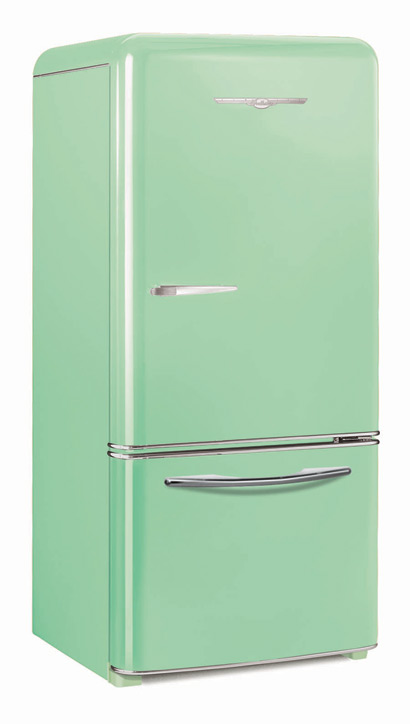
Start Global Cooling... with your fridge.


We recently published an article on building an environmentally friendly lifestyle.  We mentioned that although green design and environmentally sustainable building techniques are a good start to reducing your carbon footprint, lifestyle choices are essential to the mix.

Most of us start by replacing all of our tungsten light-bulbs with the energy-saving fluorescent alternatives.  We then start to consider things like geysers, kettles and stoves; perceived to be the most energy hungry appliances.  However, the one that we never think will contribute to global warming is our fridge…

Fridges are the third highest consumer of household energy because they run continually, and get opened several times a day.  Just think about how long it takes for an item to freeze or cool down, and then how many times you open the door in a day. 


Here are some tips on choosing and owning a fridge:

HOW TO CHOOSE A FRIDGE/FREEZER
  1. Lose the fancy icemaker: voting in favour of good old fashioned ice trays will save you up to 20 % electricity
  2. Choose the right size for your needs:  if your fridge is bigger, or smaller, you’ll have inefficient energy usage
  3. Fridge/Freezer: having the freezer on the top is the most efficient, on bottom is the next with the side-by-side options being the least energy efficient.  This is largely due to the freezer compartment size.
  4. Glass shelves: apart from the obvious longevity and environmental benefit, glass is a excellent conductor of heat (or cold, in this case), and is not an insulator like plastic, which is what you want on the inside…
  5. Self-defrosting: most models offer this feature as it improves the efficiency of the unit
SAVE ENERGY AND MONEY
Once you’ve purchased a fridge, here’s how to reduce the energy consumption:
  1. Check the door seals regularly:  the fridge should ‘suck in’ a little when the door closes
  2. Clean the coils at the back: keeping them free of dust and grime will keep efficiency to a maximum
  3. Defrost regularly: iced-up freezers use loads of energy to maintain that ice
  4. Keep the door shut: leaving the fridge door open for one minute takes half an hour to get back to  temperature again

As a green builder of luxury homes, we are not only committed to the process but also to our people.  We recognise that building a sustainable environment will take all of us working together – we hope that these tips will benefit you and the world that our children will grow up in!

Wednesday, December 21, 2011

Looking Beyond COP17


As Durban, and the rest of the world, reflects on the Conference of the Parties’ 17th Climate Change Conference 2011 (COP17) that was held last week, it’s easy to say that not much was done.  The Kyoto Treaty, which was on the cards as a massive topic for debate, has been extended another six years, and will be up for review in 2017, with it’s expiry set for 2018.

America, Japan and Australia all found enough wriggle room to avoid confronting their non-adherence to reducing their carbon emissions to the agreed amount and many other discussions were held that served to inform, more than incite change.

But the bigger picture is this:  the world is concerned and South Africans were made aware of the weight and intent of the international players to unite and build a future that is sustainable for destined generations.

As a passionate and devoted green builder, Vexiflex is not sitting around and waiting until politicians and tree-huggers agree; we believe that the world is already behind in protecting and looking after our environment.  The oldest instruction to mankind was to ‘tend the garden’, and we understand this to mean that we need to be responsible with what we have in a way that will provide more for others.

Monday, December 12, 2011

Rammed earth

Construction process of rammed earth.
Drawing on knowledge that dates back over 10 centuries, and was used to build the Great Wall of China only five short centuries back, rammed earth is natural, sustainable, 100% green and extremely cost effective.  As the world buzz is green focused, Vexiflex, and other local builders, are starting to explore the applications of this building methodology that uses sand, gravel, lime and chalk.

Earth is a natural, durable, healthy and strong building material and has around 300-psi compressive strength rating.  It doesn’t require the use of toxic treatment substances that some building materials require which minimizes its carbon footprint.  The process involves the erection of steel and wood frames that are placed parallel to each other.  The damp earth mix is poured down the middle to a depth of around 10-25cm and then compacted to about 50% of its original height. 

Wednesday, December 7, 2011

Sustainability is in the balance

The more we build, the more we learn, and one key lesson that has stood out for us is balance.  The old-school approach to building was to buy a plot, design your house, build it and live it in.  The house was as big as you could afford, the materials were often more aesthetic than functional and the design was according to your needs.

Over the past few decades, the building process has become far more intuitive, responsive and environmentally aware.  At Vexiflex, everything we do, from inception to occupation, seeks to find the balance between environmental impact and environmental sustainability.  Science and history are showing us that balance is the key to preserving the natural world in which we live.

Sunday, December 4, 2011

Energy Efficiency: Not just about Green Design


Energy efficiency begins with good, green, sustainable design, but it is meted out in our lifestyles.  Vexiflex employs sustainable design philosophy and practice green building in our construction.  However, it’s up to the owners and those living in our houses to choose a lifestyle that is responsible and environmentally sustainable.

We do our best to source and use materials that are locally made and have minimal impact on the environment, not only in their manufacture but also in their transport and longevity, which is known as embodied energy.  Once we’ve done our part, it’s up to our clients to take the philosophies and practices forward.

Here are some practical suggestions that will reduce your carbon footprint and save you money!

Tuesday, November 29, 2011

Build to endure: green building design

As we embark on hosting the world’s leading conference on environmental sustainability, COP17, South Africa has some serious work ahead as carbon emissions have increased by almost 30% in the last six years (440 metric tons in 2004 to 552 metric tons in 2010).  Vexiflex is committed to green design, environmental sustainability and is a member of the Green Building Council of South Africa.

You may like to read...