Showing posts with label green builder. Show all posts

Friday, April 20, 2012

PUGH HOUSE | THE LAY OF THE LAND

everything green | settling into the environment
Just one week before the owners are set to move in, we take a walk through our latest luxury home and review the green building measures that were taken to make this house an environmentally friendly structure...

A small and unassuming driveway peeks onto the Olive Crest road, but as one drives down the entrance, two paved tracks in perfect counterpart, it becomes clear that a private family haven is nestled on this neatly tailored plot on the environmental estate in Johannesburg’s western rand.

Wednesday, December 28, 2011

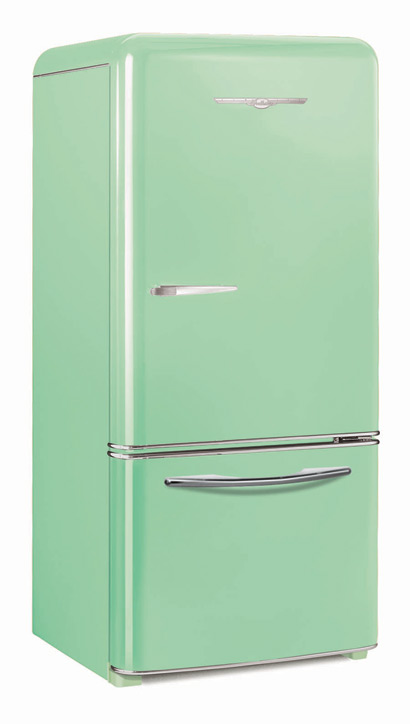
Start Global Cooling... with your fridge.


We recently published an article on building an environmentally friendly lifestyle.  We mentioned that although green design and environmentally sustainable building techniques are a good start to reducing your carbon footprint, lifestyle choices are essential to the mix.

Most of us start by replacing all of our tungsten light-bulbs with the energy-saving fluorescent alternatives.  We then start to consider things like geysers, kettles and stoves; perceived to be the most energy hungry appliances.  However, the one that we never think will contribute to global warming is our fridge…

Fridges are the third highest consumer of household energy because they run continually, and get opened several times a day.  Just think about how long it takes for an item to freeze or cool down, and then how many times you open the door in a day. 


Here are some tips on choosing and owning a fridge:

HOW TO CHOOSE A FRIDGE/FREEZER
  1. Lose the fancy icemaker: voting in favour of good old fashioned ice trays will save you up to 20 % electricity
  2. Choose the right size for your needs:  if your fridge is bigger, or smaller, you’ll have inefficient energy usage
  3. Fridge/Freezer: having the freezer on the top is the most efficient, on bottom is the next with the side-by-side options being the least energy efficient.  This is largely due to the freezer compartment size.
  4. Glass shelves: apart from the obvious longevity and environmental benefit, glass is a excellent conductor of heat (or cold, in this case), and is not an insulator like plastic, which is what you want on the inside…
  5. Self-defrosting: most models offer this feature as it improves the efficiency of the unit
SAVE ENERGY AND MONEY
Once you’ve purchased a fridge, here’s how to reduce the energy consumption:
  1. Check the door seals regularly:  the fridge should ‘suck in’ a little when the door closes
  2. Clean the coils at the back: keeping them free of dust and grime will keep efficiency to a maximum
  3. Defrost regularly: iced-up freezers use loads of energy to maintain that ice
  4. Keep the door shut: leaving the fridge door open for one minute takes half an hour to get back to  temperature again

As a green builder of luxury homes, we are not only committed to the process but also to our people.  We recognise that building a sustainable environment will take all of us working together – we hope that these tips will benefit you and the world that our children will grow up in!

Wednesday, December 21, 2011

Looking Beyond COP17


As Durban, and the rest of the world, reflects on the Conference of the Parties’ 17th Climate Change Conference 2011 (COP17) that was held last week, it’s easy to say that not much was done.  The Kyoto Treaty, which was on the cards as a massive topic for debate, has been extended another six years, and will be up for review in 2017, with it’s expiry set for 2018.

America, Japan and Australia all found enough wriggle room to avoid confronting their non-adherence to reducing their carbon emissions to the agreed amount and many other discussions were held that served to inform, more than incite change.

But the bigger picture is this:  the world is concerned and South Africans were made aware of the weight and intent of the international players to unite and build a future that is sustainable for destined generations.

As a passionate and devoted green builder, Vexiflex is not sitting around and waiting until politicians and tree-huggers agree; we believe that the world is already behind in protecting and looking after our environment.  The oldest instruction to mankind was to ‘tend the garden’, and we understand this to mean that we need to be responsible with what we have in a way that will provide more for others.

Monday, December 12, 2011

Rammed earth

Construction process of rammed earth.
Drawing on knowledge that dates back over 10 centuries, and was used to build the Great Wall of China only five short centuries back, rammed earth is natural, sustainable, 100% green and extremely cost effective.  As the world buzz is green focused, Vexiflex, and other local builders, are starting to explore the applications of this building methodology that uses sand, gravel, lime and chalk.

Earth is a natural, durable, healthy and strong building material and has around 300-psi compressive strength rating.  It doesn’t require the use of toxic treatment substances that some building materials require which minimizes its carbon footprint.  The process involves the erection of steel and wood frames that are placed parallel to each other.  The damp earth mix is poured down the middle to a depth of around 10-25cm and then compacted to about 50% of its original height. 

You may like to read...